
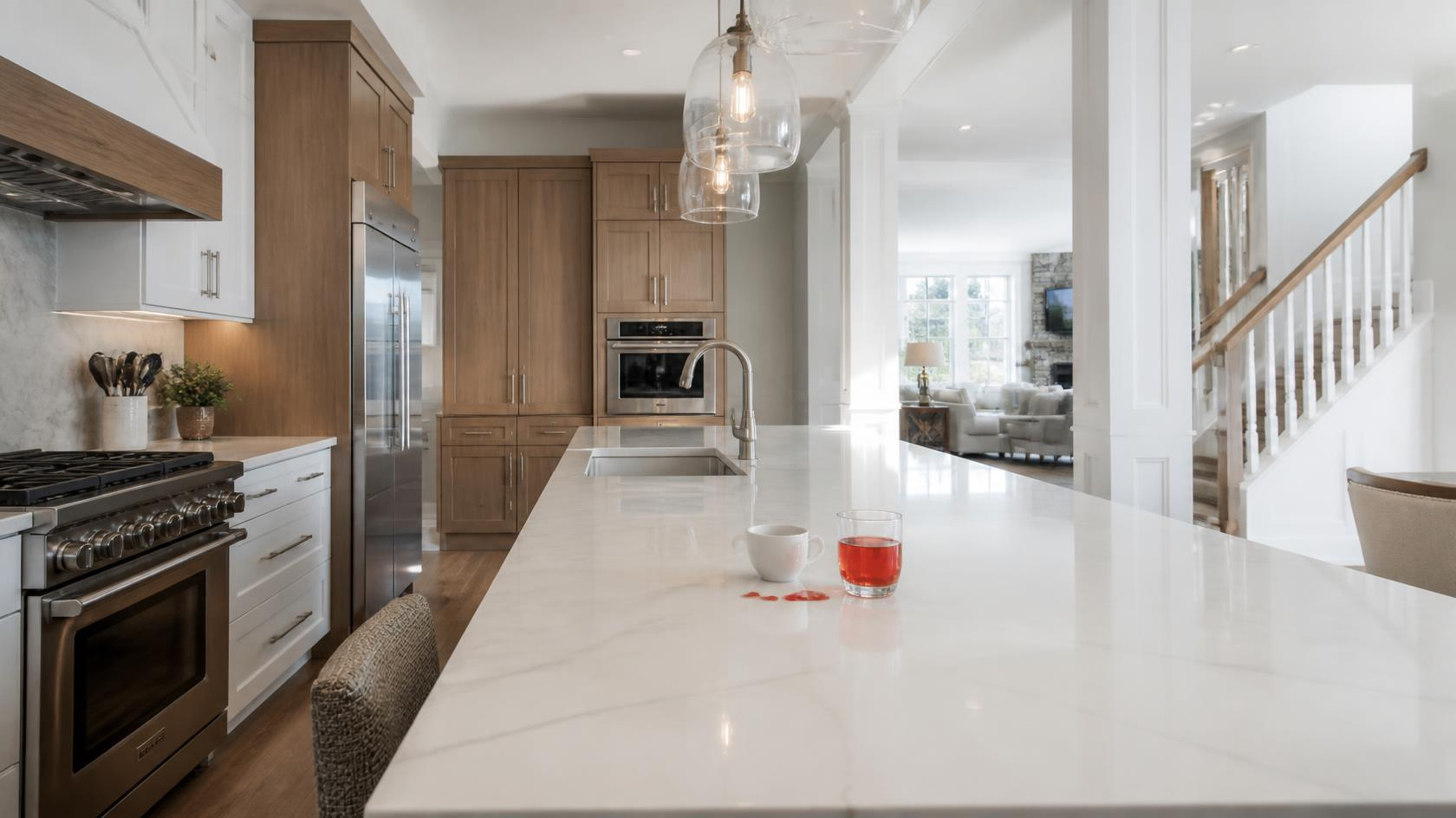
Quartz countertops are famous for being durable, low-maintenance, and highly resistant to stains.
That stain resistance is one of the main reasons quartz has become such a popular countertop material for busy kitchens and bathrooms.
But does that mean quartz is completely stain-proof?
Not exactly.
While quartz is significantly more resistant to staining than many porous surfaces, discoloration can still occur under certain circumstances—especially when spills are left on the countertop for extended periods or when inappropriate cleaning products are used.
Understanding what causes quartz stains and how to prevent them can help keep your countertops looking beautiful for decades.
In this guide, we’ll explain whether quartz countertops stain, which substances create the greatest risk, how to clean spills properly, and what Massachusetts homeowners should know about long-term quartz care.
Quick Answer
Quartz countertops are highly stain-resistant, but they aren’t completely stain-proof.
Because engineered quartz is non-porous, most liquids remain on the surface rather than penetrating deeply into the material.
However, prolonged exposure to highly pigmented substances, chemicals, or inappropriate cleaning products can potentially cause discoloration.
The best protection is simple: clean spills promptly and use cleaning products appropriate for quartz surfaces.
Why Is Quartz So Stain-Resistant?
The answer comes down to how quartz countertops are manufactured.
Unlike granite, marble, and other natural stones, engineered quartz has a non-porous surface.
Natural stone contains microscopic pores that may absorb liquids if the surface isn’t adequately sealed.
Quartz doesn’t rely on routine sealing to provide the same type of protection.
This makes it particularly resistant to everyday substances such as:
- Water
- Coffee
- Juice
- Cooking oils
- Sauces
- Food spills
For busy households, that low-maintenance performance is a significant advantage.
Can White Quartz Countertops Stain?
White quartz is highly stain-resistant, but lighter surfaces can make discoloration easier to notice.
Substances with strong pigments deserve particular attention.
These can include:
- Red wine
- Coffee
- Tea
- Tomato sauce
- Curry
- Turmeric
- Fruit juices
- Food coloring
- Permanent markers
A brief spill doesn’t necessarily mean your countertop will stain.
The bigger issue is allowing strongly pigmented substances to remain on the surface for an extended period.
Prompt cleanup is always the safest approach.
What Causes Quartz Countertop Stains?
Not every mark on quartz is actually a stain.
What homeowners describe as staining can have several different causes.
Food and Beverage Residue
Pigmented foods and beverages can leave surface discoloration when spills aren’t cleaned promptly.
Coffee, tea, tomato sauce, and strongly colored spices are common examples.
Grease and Oil
Cooking oils and grease may create a film on the countertop.
In many cases, what appears to be a stain is actually residue sitting on the surface.
Using an appropriate quartz-safe cleaner can often remove this buildup.
Hard Water
Minerals in water can accumulate around faucets and sinks.
These deposits may eventually appear as:
- White marks
- Cloudy areas
- Rings
- Dull patches
Regularly drying areas around the sink helps reduce mineral buildup.
Cleaning Products
Ironically, using the wrong cleaner can create marks that look worse than the original spill.
Harsh chemicals may affect the surface finish or interact with the binders used in engineered quartz.
Always follow the quartz manufacturer’s cleaning recommendations.
Heat Damage
A mark caused by excessive heat isn’t technically a stain.
Quartz contains binders that can react to extreme temperatures.
Placing very hot cookware directly on the surface can potentially cause:
- Discoloration
- Yellowing
- Burn-like marks
- Surface damage
These marks may be permanent.
Always use trivets or heat-resistant pads.
Does Quartz Need to Be Sealed to Prevent Stains?
No.
One of quartz’s biggest advantages is that engineered quartz generally doesn’t require periodic sealing.
The surface is already non-porous.
This distinguishes quartz from many natural stones that may benefit from periodic sealing to reduce liquid absorption.
For homeowners who want minimal maintenance, this is one of quartz’s strongest selling points.
Quartz vs. Granite: Which Is More Stain-Resistant?
Both materials perform extremely well when properly maintained.
However, they achieve stain resistance differently.
| Feature | Quartz | Granite |
|---|---|---|
| Surface | Non-Porous | Naturally Porous |
| Routine Sealing | Generally Not Required | Often Recommended |
| Stain Resistance | Excellent | Excellent When Properly Sealed |
| Daily Maintenance | Very Low | Low |
| Pigmented Spills | Clean Promptly | Clean Promptly |
| Oil Resistance | Excellent | Depends Partly on Sealer |
| Heat Resistance | Good | Excellent |
Quartz offers an advantage for homeowners who don’t want to monitor countertop sealing.
Granite offers superior resistance to high temperatures and the unique appearance of natural stone.
How to Prevent Quartz Countertop Stains
Preventing discoloration is much easier than trying to remove stubborn marks later.
A few simple habits can make a major difference.
Clean spills immediately.
Don’t allow coffee, wine, sauces, or strongly colored foods to remain on the countertop unnecessarily.
Use cutting boards.
Cutting boards protect the countertop and make food preparation easier to clean.
Use trivets.
Protect quartz from hot cookware and heat-producing appliances.
Avoid harsh chemicals.
Use products recommended for engineered quartz.
Dry areas around sinks.
This helps prevent mineral deposits and hard-water buildup.
How to Clean Quartz Countertops Daily
Quartz doesn’t require complicated cleaning.
For routine maintenance:
- Remove crumbs and loose debris.
- Wipe the countertop with a soft cloth.
- Use warm water and mild soap when appropriate.
- Remove remaining moisture with a clean microfiber cloth.
For cleaning products, always follow the recommendations provided by the quartz manufacturer.
Avoid abrasive pads that could affect the finish.
How to Remove a Fresh Spill
If coffee, wine, sauce, or another pigmented liquid spills onto quartz, don’t panic.
Start by blotting or wiping away the substance.
Then:
- Clean the area with warm water and mild soap.
- Use a soft microfiber cloth.
- Rinse away any remaining residue.
- Dry the countertop.
Avoid aggressively scrubbing the surface.
Most fresh spills are much easier to remove when addressed immediately.
What About Stubborn Marks?
If normal cleaning doesn’t remove a mark, don’t immediately reach for stronger chemicals.
The appropriate cleaning method can vary depending on the quartz manufacturer and the substance responsible for the discoloration.
Before using specialized stain removers, solvents, or stronger cleaning products, check the manufacturer’s care instructions or consult a countertop professional.
Using an incompatible chemical may turn a small cosmetic problem into permanent surface damage.
Cleaning Products to Avoid
Quartz is durable, but that doesn’t mean every household cleaner is appropriate.
Products or methods that may cause problems include:
- Highly abrasive cleaners
- Scouring powders
- Steel wool
- Harsh chemical cleaners
- Strong solvents unless manufacturer-approved
- Oven cleaners
- Aggressive scrubbing pads
When you’re unsure about a product, test manufacturer recommendations before applying it across the countertop.
Can Bleach Be Used on Quartz?
It’s best not to assume that bleach is safe for every quartz surface.
Quartz products vary by manufacturer, and cleaning recommendations may differ.
Frequent or concentrated exposure to harsh chemicals can potentially affect the surface.
For routine cleaning, mild products are usually all that’s necessary.
Can Vinegar Be Used on Quartz?
Vinegar is commonly recommended as a household cleaner, but it’s not automatically the best choice for engineered surfaces.
Because manufacturers can have different care requirements, using a mild quartz-compatible cleaner is the safer approach.
The simplest rule is:
Don’t use a stronger chemical when a mild cleaner will do the job.
Does Coffee Stain Quartz?
Coffee can leave discoloration or residue if it’s allowed to remain on the surface for an extended period, particularly on very light quartz.
However, quartz’s non-porous construction makes it highly resistant to coffee compared with many absorbent surfaces.
Wiping coffee spills promptly significantly reduces the risk.
Does Red Wine Stain Quartz?
Quartz is highly resistant to wine stains, but red wine contains strong pigments.
Don’t leave a spill sitting overnight.
Clean the area promptly with an appropriate mild cleaning solution.
This same advice applies to grape juice and other deeply colored beverages.
Can Turmeric Stain Quartz?
Turmeric contains extremely strong natural pigments and deserves special attention on light countertops.
Clean turmeric, curry, and similarly pigmented ingredients as soon as possible.
Using cutting boards and preparing highly pigmented foods carefully can prevent unnecessary discoloration.
What About Makeup and Bathroom Products?
Quartz is also commonly used for bathroom vanities.
Products such as:
- Foundation
- Hair dye
- Nail polish
- Cosmetics
- Self-tanning products
may contain pigments or chemicals that shouldn’t remain on the countertop for extended periods.
Cleaning spills promptly is just as important in bathrooms as it is in kitchens.
Why Some Marks Aren’t Actually Stains
Before assuming quartz has permanently stained, determine whether the problem could simply be surface buildup.
Common examples include:
- Soap residue
- Grease film
- Hard-water minerals
- Adhesive residue
- Dried food
A professional can help identify whether the issue is surface residue, chemical damage, heat damage, or true discoloration.
This distinction matters because each problem requires a different solution.
Are Dark Quartz Countertops Better at Hiding Stains?
Dark quartz may make certain forms of discoloration less noticeable, but it can reveal other issues more easily.
For example, black or charcoal countertops may show:
- Dust
- Fingerprints
- Water spots
- Soap residue
Light quartz can reveal strongly colored spills more clearly.
Neither is inherently better. The best option depends on your lifestyle and design preferences.
Quartz with subtle movement or veining can be particularly practical because the pattern helps disguise minor everyday marks.
Is Quartz a Good Choice for Busy Kitchens?
Yes.
Stain resistance is one of the reasons quartz works so well in active households.
For families who regularly cook, entertain, or use the kitchen throughout the day, quartz provides several practical advantages:
- Easy cleanup
- No routine sealing
- Excellent stain resistance
- Excellent durability
- Large selection of designs
Basic care is still necessary, but the overall maintenance requirements are minimal.
How Long Can Quartz Stay Looking New?
With proper care, quality quartz countertops can maintain their appearance for decades.
Long-term performance depends on:
- Material quality
- Professional fabrication
- Proper installation
- Appropriate cleaning
- Protection from excessive heat
- Avoiding harsh chemicals
- Preventing heavy impact on edges
Countertop longevity begins with both the material and the craftsmanship behind the installation.
Why Professional Fabrication Matters
Stain resistance is built into quartz, but professional fabrication affects the overall performance of your countertop.
Experienced fabrication helps ensure:
- Precise measurements
- Proper seams
- Clean sink cutouts
- Finished edges
- Correct structural support
- Professional installation
Areas around sinks and seams deserve particular attention because they’re frequently exposed to water and daily cleaning.
Why Choose Accurate Pro Countertops?
At Accurate Pro Countertops, we help Massachusetts homeowners choose countertop materials that fit both their design preferences and everyday lifestyle.
If low maintenance and stain resistance are priorities, quartz may be an excellent choice.
Our team can help you compare quartz colors, patterns, manufacturers, and other countertop materials before making your final selection.
Our countertop services include:
- Material consultation
- Professional templating
- Custom fabrication
- Sink and cooktop cutouts
- Edge fabrication
- Seam planning
- Professional installation
Whether you’re remodeling a kitchen, updating a bathroom, or creating a custom island, our goal is to provide a countertop that’s both beautiful and practical.
Frequently Asked Questions
Do quartz countertops stain easily?
No. Quartz is highly stain-resistant because its surface is non-porous. However, strongly pigmented substances should still be cleaned promptly.
Are quartz countertops completely stain-proof?
No countertop should be considered completely stain-proof. Quartz offers excellent resistance, but discoloration or surface damage can still occur under certain conditions.
Does coffee stain white quartz?
Coffee can potentially leave discoloration or residue if left on the surface for too long. Prompt cleaning significantly reduces the risk.
Can red wine stain quartz countertops?
Quartz resists wine well, but red wine contains strong pigments. Clean spills as soon as possible rather than allowing them to dry.
Does turmeric stain quartz?
Turmeric has powerful natural pigments and can create stubborn marks, particularly on light surfaces. Clean it immediately.
Do quartz countertops need sealing?
Engineered quartz generally doesn’t require routine sealing because the surface is non-porous.
Can quartz stains be professionally removed?
It depends on what’s causing the mark. Surface residue may be removable, while damage caused by heat or certain chemicals may require professional evaluation.
What is the safest way to clean quartz?
Routine cleaning with a soft cloth, warm water, and mild cleaner is generally appropriate. Always follow the care recommendations from the specific quartz manufacturer.
Final Thoughts
So, do quartz countertops stain?
Quartz is one of the most stain-resistant countertop options available for residential kitchens and bathrooms, but it shouldn’t be treated as completely stain-proof.
The best approach is straightforward: clean spills quickly, avoid harsh chemicals, protect the surface from excessive heat, and follow the manufacturer’s maintenance recommendations.
With these simple habits, quartz can maintain its clean, polished appearance for many years.
For Massachusetts homeowners looking for a countertop that combines modern design, durability, and minimal maintenance, quartz remains an excellent option.
If you’re considering quartz for your kitchen or bathroom, Accurate Pro Countertops can help you select the right material, color, and design for your project.
From professional templating and custom fabrication to final installation, our experienced team can help transform your space with countertops built for everyday life.